DIART® group n=44
Results were maintained at 12 months without any Grade III.
DIART® weekly injections after absence of all inflammation symptoms and exudate (average 5–6 weeks).



DIART® is a high molecular weight of hyaluronic acid of 3 million dalton and stabilised with Sodium Succinate for long lasting OA treatment and prevention.
DIART® comes in two higher concentration preparations of prefilled syringes of 1.1% and 1.8%.
DIART® efficacy has been proven in several clinical trials. For more information please visit www.diart.com
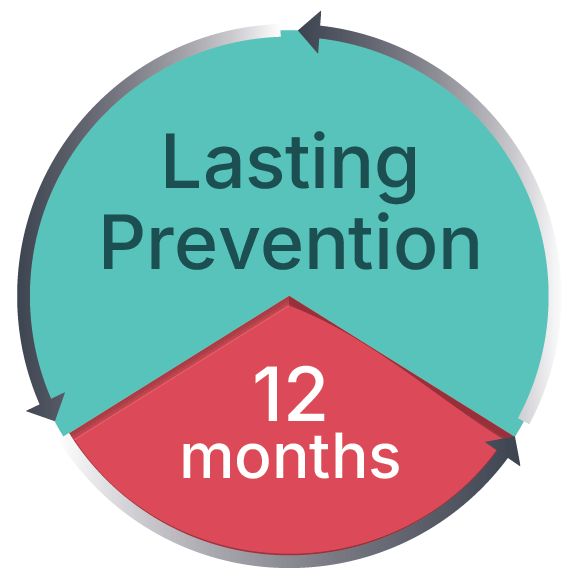
DIART® containing high molecular weight of hyaluronic acid and Sodium Succinate is a unique patented formulation that combines chondroprotective and anti-oxidant actions, affecting key pathogenetic mechanism in osteoarthritis development that is often left without treatment.
Early and rapid onset of post-traumatic osteoarthritis (8.8% to 46%) is the main unsatisfactory result and cause of disability of intra-articular lesions treatment.
3–12 months
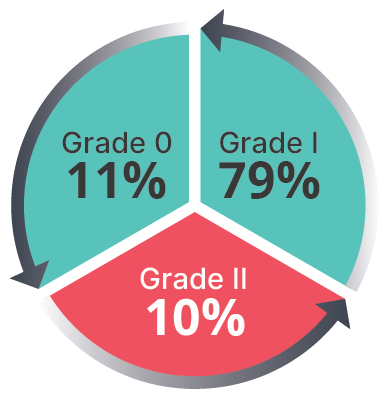
6 months
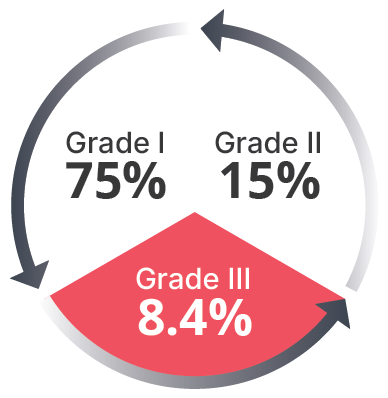
12 months
Results were maintained at 12 months without any Grade III.
DIART® weekly injections after absence of all inflammation symptoms and exudate (average 5–6 weeks).
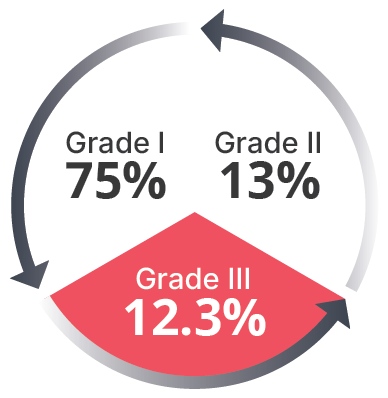
Significant progression of OA in the comparison group.
In traumatic knee injuries, enormous local acceleration of free radical peroxidation occurs, being the key pathogenetic mechanism in osteoarthritis development.
DIART® insertion directly to the seat of the pathological process helps to normalize key pathological factors and slow down the progression of OA while restoring the antioxidant defense in the affected joint.
The use of DIART® in case of old lesions is accompanied by formation of fibrous and fibrous-bone regeneration.
(Buryanov O.A., Brusko A.T., Omelchenko T.M., Sobolevskyi Y.L., 2008).
Affects the main factors of OA progression:

“DIART® was superior to comparison group in reducing pain, rate of movement activity restoration and stability of treatment results.”
Ask our team for product information, pack sizes and supply details for your hospital, clinic or pharmacy.